WAYMO BOSTON: EVERYTHING YOU NEED TO KNOW IN 2026
Waymo wants to bring its robotaxi service to Boston. Massachusetts law says not yet. Here's the full story — the testing happening right now on our streets, the legislation moving through Beacon Hill, the unions pushing back, and what it actually means for daily Boston drivers.
Autonomous Boston Rob
Daily Model Y driver · Boston, MA
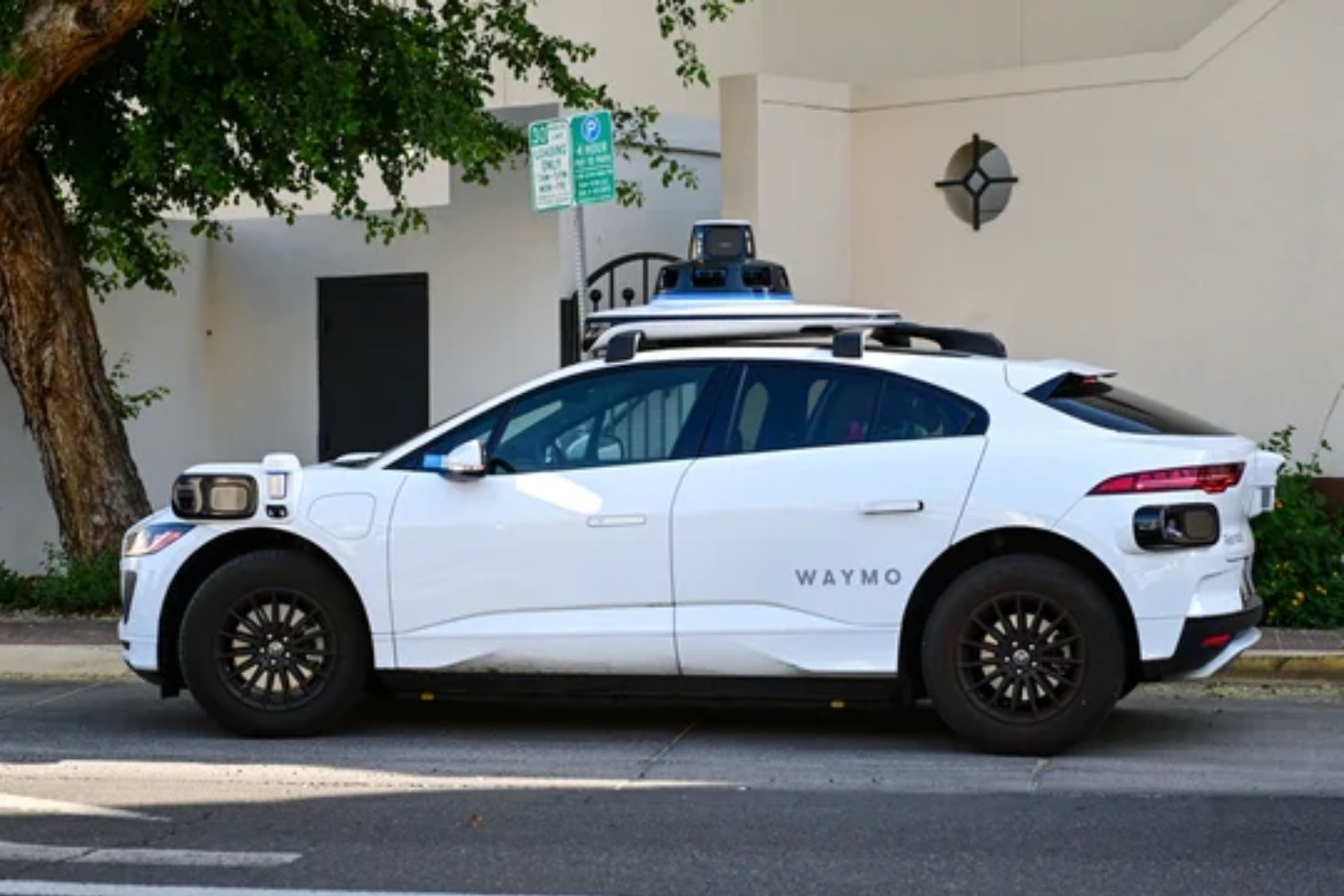
Waymo is currently testing in Massachusetts — with a human safety driver behind the wheel.
TL;DR
- →Waymo is actively testing 6th-gen vehicles on Boston streets right now — with human drivers behind the wheel.
- →Massachusetts has no AV law. Waymo cannot operate driverlessly here until the legislature acts.
- →Two bills — Senate S.2379 and House H.3634 — are in committee and could change that.
- →Waymo spent $330K lobbying Beacon Hill in 2025. The unions are fighting back hard.
- →Boston is widely considered the hardest autonomous driving environment in America.
WHY BOSTON IS THE FINAL BOSS
There's a reason Waymo chose Boston as one of its key winter testing destinations in 2026. It's not because Boston is easy. It's because Boston is the hardest city in America for autonomous vehicles to crack — and if you can make it here, you can make it anywhere.
I drive a 2026 Tesla Model Y out of Boston every day. I use FSD on most trips. And I can tell you firsthand: Boston roads are a different animal. The rotaries have no signage. The streets in the North End were literally cow paths before they were paved. Storrow Drive has a clearance limit that takes out a truck every few months. Drivers treat red lights as suggestions and crosswalks as optional.
Waymo has called Boston's driving culture "distinct." That's a very diplomatic way of putting it. One Reddit commenter put it more accurately when they called Boston "the final boss as far as self-driving is concerned." As someone who navigates this every day, I'd say that's about right.
So when Waymo announced in February 2026 that it was returning to Boston to test its 6th-generation Waymo Driver, the AV world paid attention. The company had done an exploratory trip in 2025. Now they're back, more seriously, validating the system against cobblestones, rotaries, snow, and the uniquely aggressive behavior of Massachusetts drivers.
WHAT WAYMO IS ACTUALLY DOING IN BOSTON RIGHT NOW
Let's be clear about what "testing in Boston" means in 2026. Waymo vehicles are on our streets, but there's a human safety driver behind the wheel at all times. Massachusetts law requires it. Waymo cannot operate fully driverlessly here — not yet.
The testing covers a serious swath of the metro. Waymo has confirmed vehicles in Mission Hill, East Boston, Cambridge, Somerville, South Boston, and on I-90 and I-93. The focus is on validating the 6th-gen Waymo Driver system against the specific challenges Boston presents: cobblestone streets, tight colonial-era alleys, rotaries, and winter weather conditions that most Waymo operating markets don't have.
That last point matters. Waymo currently operates in Phoenix, San Francisco, Los Angeles, Austin, Miami, Seattle, and Minneapolis. Of those, only Minneapolis and Seattle deal with real winter. Boston is in a different league. The company has explicitly said it wants to validate fully autonomous winter operations here — meaning if it works in a Boston February, it can work anywhere.
By the numbers
THE LEGAL PROBLEM: MASSACHUSETTS HAS NO AV LAW
Here's the core issue: Massachusetts is not among the more than half of US states that have passed autonomous vehicle legislation. There is no framework here for a fully driverless car to operate legally on public roads.
To test with a human safety driver, companies submit an application to MassDOT. As of early February 2026, Waymo had not even done that — a spokesperson confirmed the application hadn't been filed yet despite the testing announcement. To go fully driverless, which is Waymo's commercial model, the state needs to pass a law explicitly permitting it.
Waymo has been refreshingly direct about this: "Before offering fully autonomous rides to Bostonians, we'll first need the state to legalize fully autonomous vehicles." That's not a complaint — it's a lobbying strategy. You acknowledge the obstacle, you work to remove it.
THE TWO BILLS YOU NEED TO KNOW
Two pieces of legislation are currently moving through Beacon Hill that could change everything. Here's what they actually say:
Sponsor: Sen. William Driscoll (D-Milton)
Would allow autonomous vehicles on Massachusetts state highways provided they meet requirements to return control to a human passenger if needed. Creates a licensing framework via MassDOT. Driscoll has been clear: "Autonomous vehicles are here and more are on the way. Massachusetts needs to have a clear and consistent policy for them."
Sponsor: Rep. Dan Cahill (D-Lynn) & Rep. Natalie Blais (D-Deerfield)
The companion House bill. More comprehensive — defines Level 4 and Level 5 autonomous vehicles, requires an autonomous operation license from MassDOT, mandates $1 million minimum liability insurance, and requires companies to file a law enforcement interaction plan before operating.
There's also a wrinkle at the federal level: the SELF DRIVE Act of 2026 has been introduced in Congress and includes a federal preemption clause — meaning if it passes, federal rules would override state restrictions on autonomous driving systems. That would effectively remove Massachusetts' veto power over Waymo's operation here. Watch this space.
THE OPPOSITION: WHO'S FIGHTING WAYMO AND WHY
This isn't just a tech story. There are real people fighting hard against Waymo's expansion, and their concerns deserve a straight hearing.
The unions. Teamsters Local 25, the union representing Uber and Lyft drivers in Massachusetts, and the AFL-CIO have all come out strongly against the AV bills. They've held rallies outside the State House. Their argument is straightforward: driverless cars eliminate jobs. They're not wrong about that — they're wrong to think legislation can stop the technology, but their economic concern is legitimate.
Boston City Council. Several city councilors have proposed an outright ban on driverless vehicles within city limits. Councilor Ed Flynn raised practical Boston-specific concerns: double-parkers, delivery drivers, nonstop road construction, and snow banks. These aren't theoretical objections — they're real conditions that any AV system operating in Boston will have to handle.
The Chief of Streets. Perhaps the most pointed skepticism came from Boston's Chief of Streets, Jascha Franklin-Hodge, who said at a City Council hearing: "If every Waymo drives like a confused out-of-state tourist, we will very quickly find them unwelcome on the streets of Boston." As a Boston driver, I appreciate the honesty. That's a real bar to clear.
The supporters. On the other side, disability advocates have been vocal — the Bay State Council of the Blind supports Waymo's expansion, saying autonomous vehicles would provide transportation independence for people who can't drive. That's not a small thing. MADD (Mothers Against Drunk Driving) has also noted the potential safety benefits. Public polling shows most Massachusetts voters support expanding AV access.
WAYMO VS TESLA FSD: TWO DIFFERENT APPROACHES
I drive Tesla FSD every day. Waymo represents a completely different philosophy — and understanding the difference matters if you want to understand what's actually coming to Boston streets.
Tesla FSD is supervised autonomy. You own the car, you subscribe to the software, and you remain legally responsible for everything that happens. FSD 14.3 is genuinely impressive — it handles most Boston driving situations well. But it still requires an attentive driver behind the wheel. It is not a robotaxi.
Waymo is a robotaxi service. You call the car on an app, it picks you up, no human driver, you pay per ride. The vehicle is owned and operated by Waymo. When something goes wrong, Waymo is responsible. The business model, the technology stack (Waymo uses LiDAR and radar alongside cameras; Tesla is camera-only), and the regulatory requirements are all completely different.
Both are coming to Boston. I'll be testing both on the same roads and reporting back here. That head-to-head comparison — same rotary, same weather, same city — is something nobody else is going to do.
WHAT HAPPENS NEXT
The legislative picture is moving fast. Here's what to watch:
- →Joint Committee on Transportation hearings: S.2379 and H.3634 are both in committee. Hearings will determine whether these move forward or stall.
- →Waymo MassDOT application: Waymo needs to file a formal testing application with MassDOT before it can legally operate with safety drivers. That filing will be a significant signal.
- →Federal SELF DRIVE Act: If the federal bill passes with its preemption clause, Massachusetts may lose its ability to restrict AV operations entirely.
- →November 2026 ballot landscape: A ballot initiative requiring human operators in self-driving transportation vehicles was proposed but didn't qualify for the 2026 ballot. Unions may try again in 2028.
- →Waymo Q4 2026 expansion: Waymo has signaled Boston is a target for commercial launch in 2026, pending legislation. Watch Beacon Hill closely in Q3.
We're tracking every development at Autonomous Boston. The MA Policy section is updated as legislation moves. If you want alerts when something changes, the newsletter is the fastest way to stay ahead of it.
THE BOTTOM LINE
Waymo is coming to Boston. The question is when, not if. The company has the money ($16 billion raised), the technology (6th-gen Waymo Driver being tested on our streets right now), and the political infrastructure (two lobbying firms, a sympathetic state rep) to make it happen.
What stands between Waymo and Boston is one thing: state law. And that's moving.
Whether you're excited about it, worried about it, or just curious — this is the biggest transportation story in Massachusetts in a decade. And it's happening right outside our doors.
I'll be watching it from Boston, and reporting back here every time something moves.
Newsletter
MA Policy & FSD Updates
New Waymo legislation, FSD releases, and Boston AV news — straight to your inbox.