Tesla FSD Navigates Jamaica Way — Stop Signs, Rotary & Pedestrians Hands-Free
One of the city's most underrated driving challenges. FSD 14.3 handled the full sequence without a single intervention.
Tesla FSD 14.3 on Jamaica Way, Boston, MA · No interventions
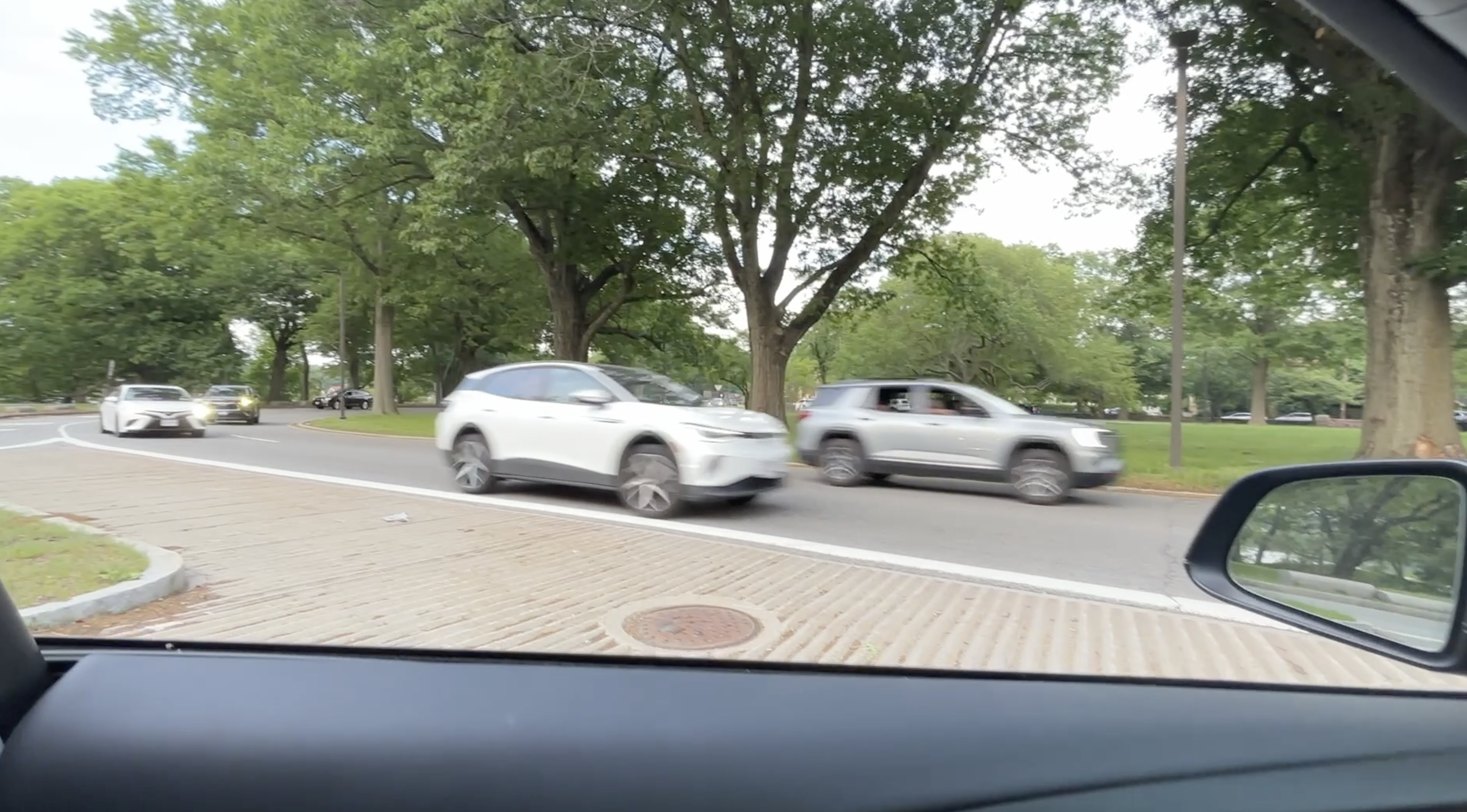
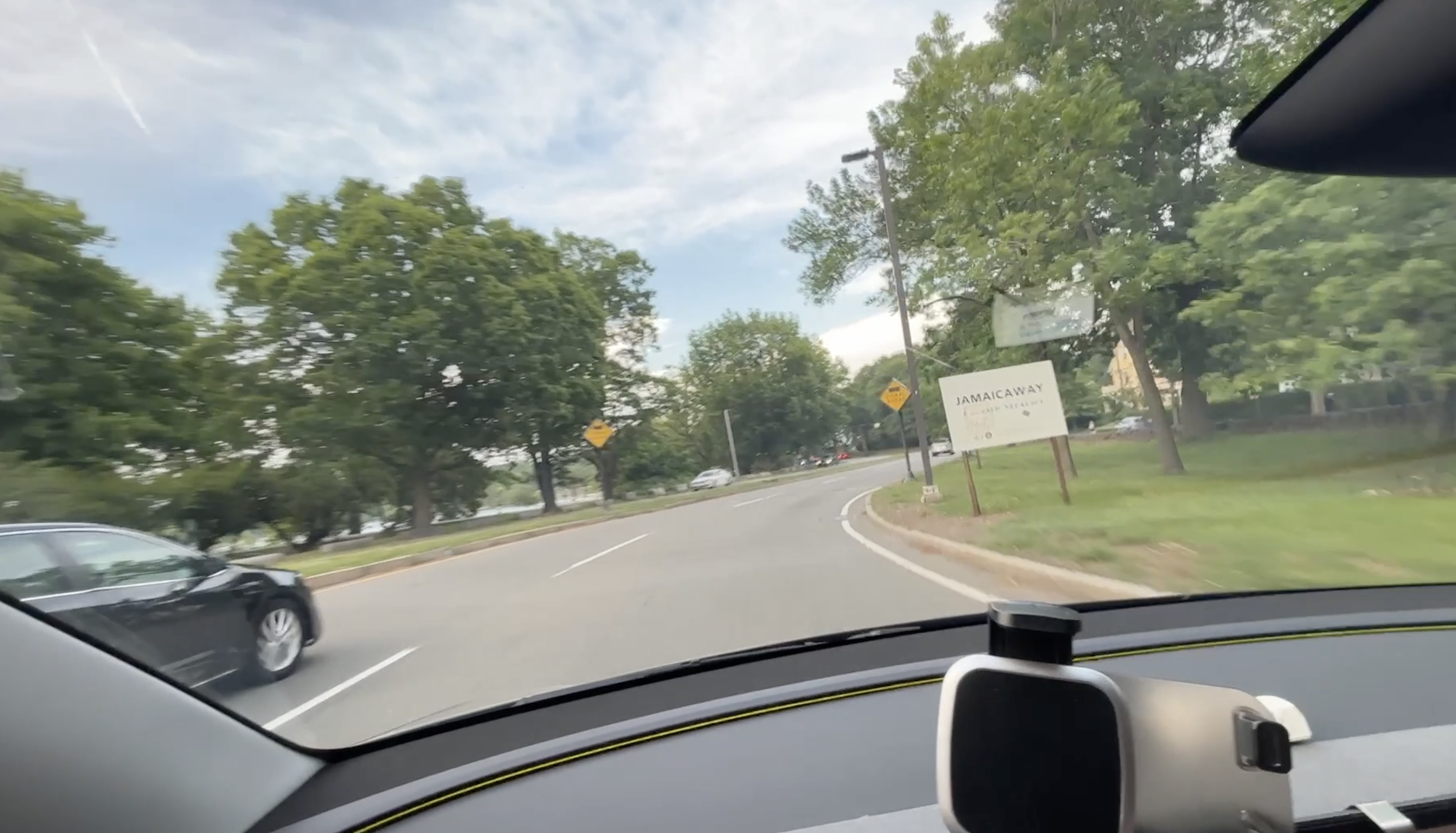
What FSD handled — completely hands-free
- ✅Stops at a stop sign and waits for oncoming traffic to clear
- ✅Moves into the left lane and executes a clean U-turn
- ✅Enters a rotary, reads the traffic, and merges safely
- ✅Gets into the far right lane to set up the next turn
- ✅Yields to a family of pedestrians before making the final turn
No interventions. No phantom braking. No drama. Just FSD doing exactly what it's supposed to do on real Boston streets.
Why Jamaica Way is a legitimate FSD test
Jamaica Way doesn't get the attention of Storrow Drive or the Big Dig tunnels, but it's one of the more technically demanding stretches of road in Greater Boston for an autonomous system. It's a curved parkway — originally designed as a scenic carriage road in the late 1800s — with speed limits that shift between 25 and 35 mph, no consistent lane markings in sections, rotaries at both ends, and a steady mix of cyclists, joggers, and pedestrians crossing at uncontrolled points.
For FSD, the challenge isn't any single moment. It's the combination: reading a rotary without painted guidance lines, adjusting to moving pedestrians, and committing to a lane change on a curved road where sight lines are limited. Boston drivers don't make it easier.
The sequence, broken down
The run started with a stop sign approach where multiple cars were moving through. FSD held position, tracked the cross-traffic, and waited for a genuine gap before committing — no hesitation creep, no false start. After clearing the intersection, it moved left and executed a clean U-turn to set up the rotary entry.
Rotary behavior is where a lot of autonomous systems show their limits. FSD read the rotary traffic, identified a gap, merged smoothly, and tracked the arc to the exit lane. From there it repositioned right for the final turn — and held at a crosswalk when a family of pedestrians stepped out. Clean stop, clean yield, clean departure.
The entire sequence ran without a single takeover request and without the kind of phantom braking that used to be a signature FSD complaint on Boston roads.
What this tells us about FSD 14.3
One run doesn't define a system. But this sequence — stop sign with cross-traffic, U-turn, rotary merge, lane change, pedestrian yield — covers a lot of the decision-making surface that separates a capable autonomous system from a demo. FSD 14.3 handled all of it without drama.
We'll keep running Jamaica Way as a baseline. If FSD can handle this consistently, it can handle anywhere in Boston.
Run Details
Frequently Asked Questions
How did Tesla FSD handle Jamaica Way in Boston?
Tesla FSD 14.3 completed the full Jamaica Way sequence completely hands-free — stopping at a stop sign, executing a U-turn, merging into a rotary, changing lanes, and yielding to pedestrians with zero interventions.
Why is Jamaica Way a good FSD test route?
Jamaica Way is a curved parkway with changing speed limits, rotaries at both ends, frequent cyclists, pedestrian crossings, and Boston-area drivers. It combines multiple autonomous driving challenges in a single continuous route.
What FSD version was used on Jamaica Way?
FSD version 14.3, tested on a 2026 Tesla Model Y Long Range (Nova) in Boston, MA.
More FSD Coverage
Every run. Every road. Every result.
Get our weekly FSD tests and Waymo updates delivered to your inbox.
Subscribe — it's free