Tesla FSD Around Fenway Park — Trolley Tracks, Double-Parks & Game-Day Traffic Hands-Free
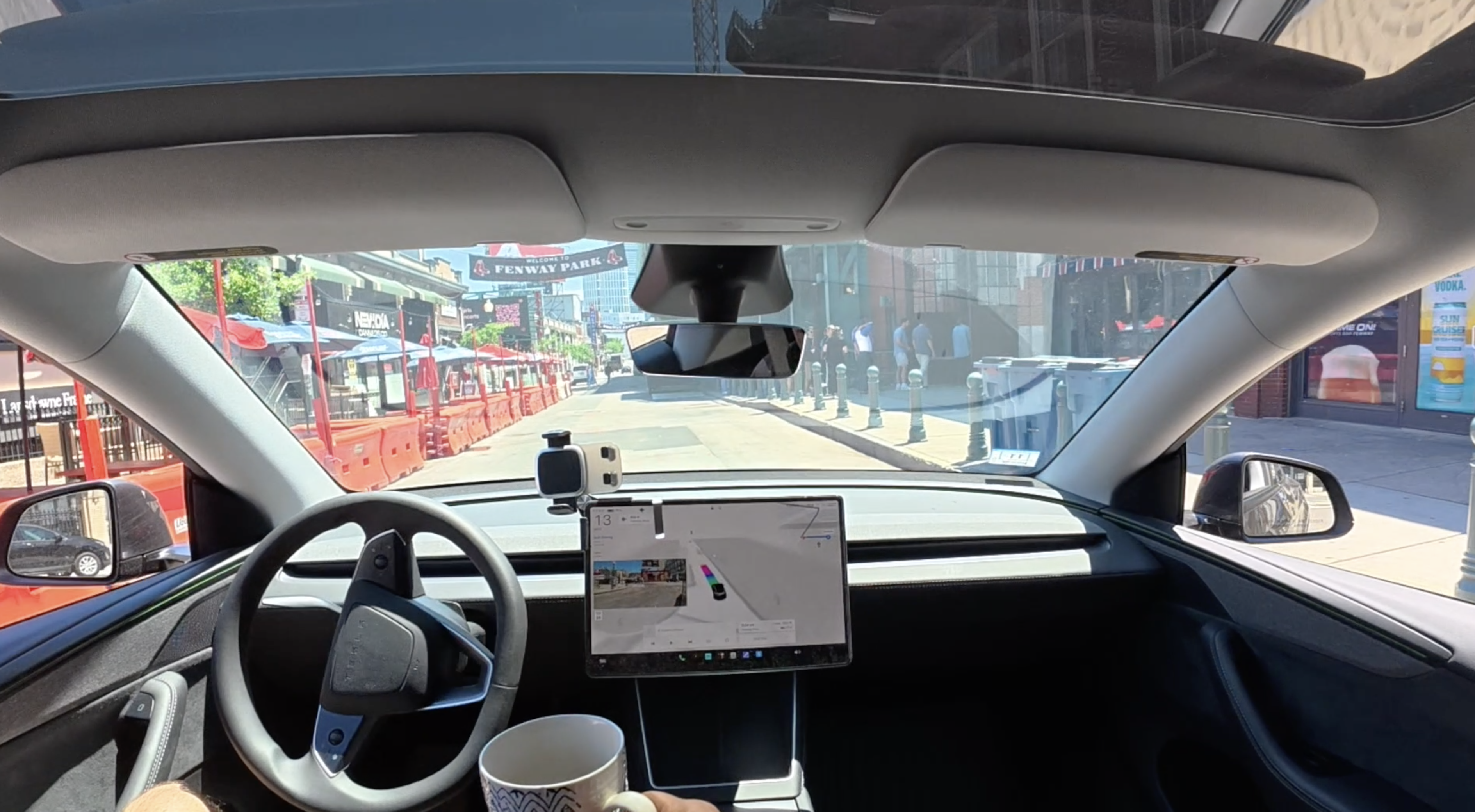
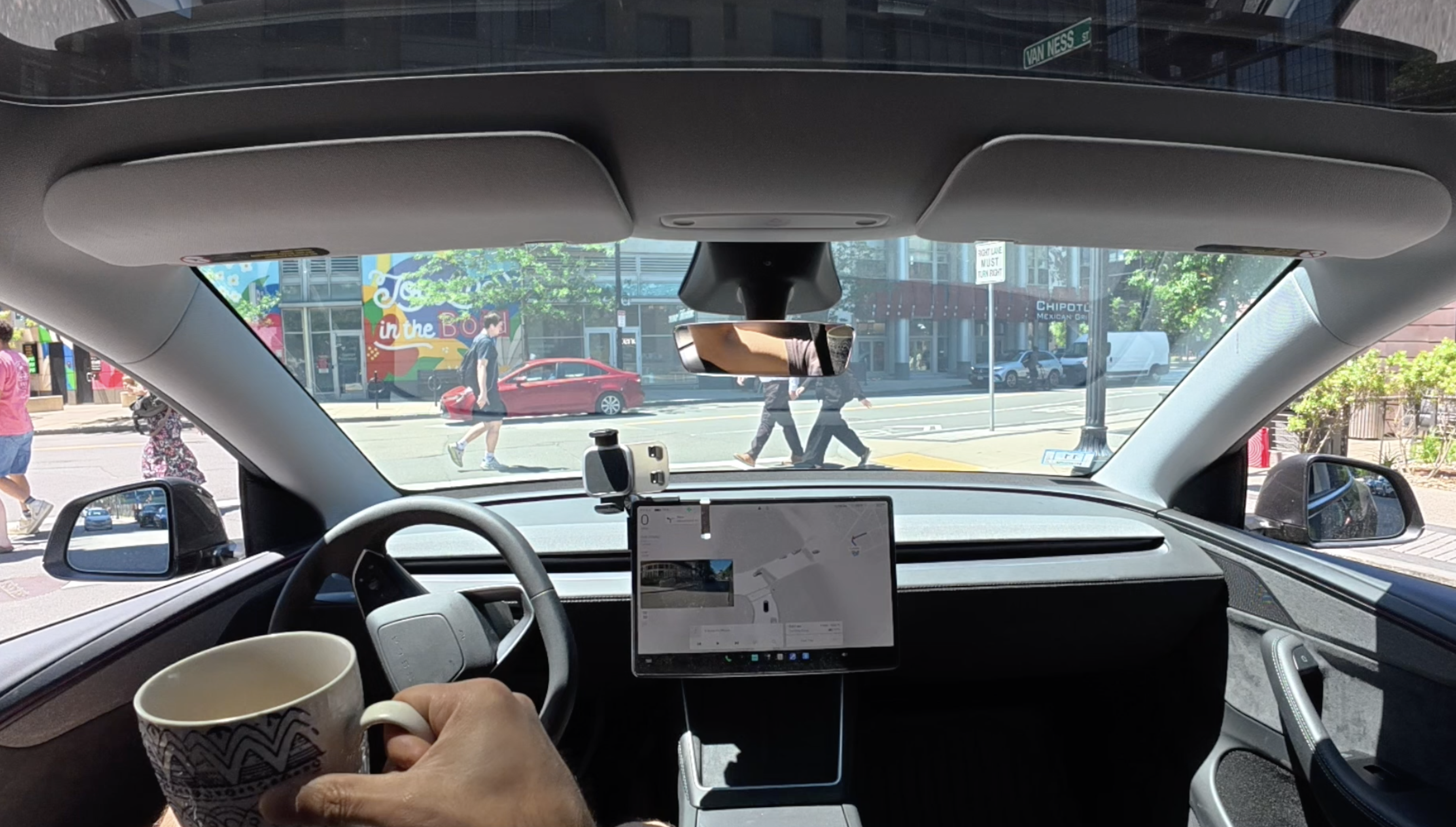
One of Boston's most iconic neighborhoods. Trolley tracks, double-parked cars, jaywalkers, tight turns, and game-day energy — FSD handled every obstacle without a single intervention.
Tesla FSD 14.3 · Fenway Loop, Boston, MA · No interventions
The Route
What FSD handled — completely hands-free
- ✅Trolley tracks on Brookline Ave and Commonwealth Ave
- ✅Double-parked cars blocking lanes near Fenway
- ✅Pedestrians jaywalking around the ballpark
- ✅Tight turns through Brookline Village
- ✅Game-day traffic energy on Lansdowne Street
- ✅Full Beacon Street corridor back to the dog park
This route has it all. Watch how FSD handles every obstacle without a single intervention.
Why Fenway is a legitimate FSD test
The Fenway neighborhood is one of the densest, most unpredictable driving environments in Boston. The streets were laid out before the automobile existed — narrow, irregular, and full of edge cases that challenge even experienced human drivers. Add trolley tracks cutting across travel lanes, Fenway Park game-day pedestrian overflow, and the usual cast of delivery trucks parked wherever they feel like it, and you have a genuine stress test for any autonomous system.
The route we ran covers the key challenges: Commonwealth Ave with its trolley infrastructure, the tight turn sequence through Brookline Village, the Lansdowne Street gauntlet past the ballpark, and the Beacon Street run back west. Each segment presents different problems — lane discipline on a busy boulevard, close-quarters maneuvering, pedestrian unpredictability, and consistent speed management on a long straight.
The sequence, broken down
Starting on Commonwealth Ave, FSD handled the trolley track crossings cleanly — no jerking or hesitation as the wheels crossed the rails. Through Brookline Village, the tight turns and narrow lanes that catch a lot of drivers off guard were handled with steady positioning. On Lansdowne Street, with Fenway Park on the right and pedestrians moving unpredictably in every direction, FSD tracked its lane and yielded appropriately without over-braking.
The double-parked car situations — a staple of Boston FSD testing — were handled with smooth lane adjustments rather than abrupt swerves. The system read the obstruction, checked the adjacent lane, and moved around cleanly. No drama.
Beacon Street back to the dog park ran smoothly. Speed management, traffic light response, and pedestrian yielding all clean.
What this tells us
The Fenway loop is a repeatable test we can run across FSD versions and seasons. Game-day conditions with crowd overflow will be a future run. For now, FSD 14.3 passed the standard weekday version of this route cleanly.
Boston is widely considered one of the hardest driving environments in North America for autonomous systems. The Fenway neighborhood is one of the reasons why. We'll keep running it.
Run Details
Frequently Asked Questions
How did Tesla FSD handle the Fenway neighborhood in Boston?
Tesla FSD 14.3 navigated the full Fenway loop completely hands-free — from Commonwealth Ave through Brookline Village, past Fenway Park on Lansdowne Street, and out along Beacon Street — with zero interventions despite trolley tracks, double-parked cars, and jaywalking pedestrians.
Why is the Fenway neighborhood a good FSD test?
The Fenway area combines trolley tracks, narrow streets, heavy pedestrian activity, double-parked delivery vehicles, game-day crowds, and tight turns — making it one of the most complex urban driving environments in Boston for an autonomous system.
What route did Tesla FSD take around Fenway?
Commonwealth Ave → Brookline Ave → Lansdowne Street (past Fenway Park) → Beacon Street, ending at the dog park. The full loop covers Brookline Village, the Fenway ballpark area, and the Beacon Street corridor.
Every run. Every road. Every result.
Get our weekly FSD tests and Waymo updates delivered to your inbox.
Subscribe — it's free